
HOME
Your primary goal is to help people visualize the past. You are ambassadors of a time machine from the Conru Art Foundation. We want you to be expert tour guides of the 10 to 15 beats for the experience we are putting on.
By walking visitors through these "lost worlds," you are connecting them to the real history of Seattle. Treat the spaces with reverence and bring the stories to life.
Location: 1414 5th Ave (5th and Pike).
The Beat: Gather the group here. Introduce yourself and the Conru Art Foundation. Hand out the hardhats and explain that we are about to step into spaces that have been sealed away from the public for decades.
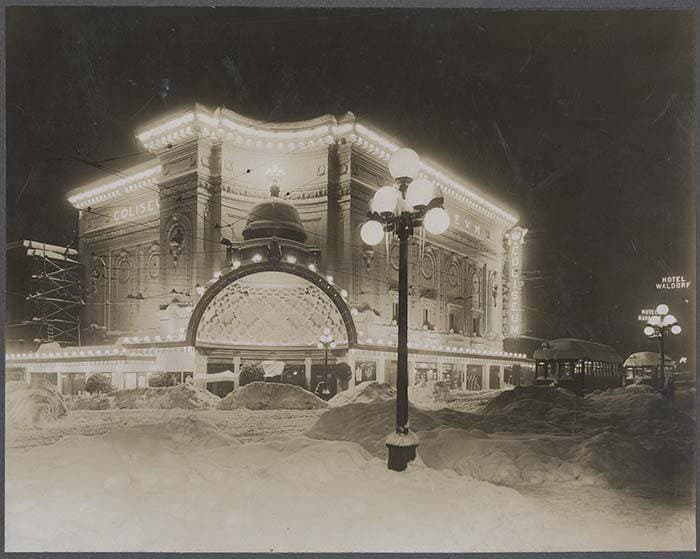
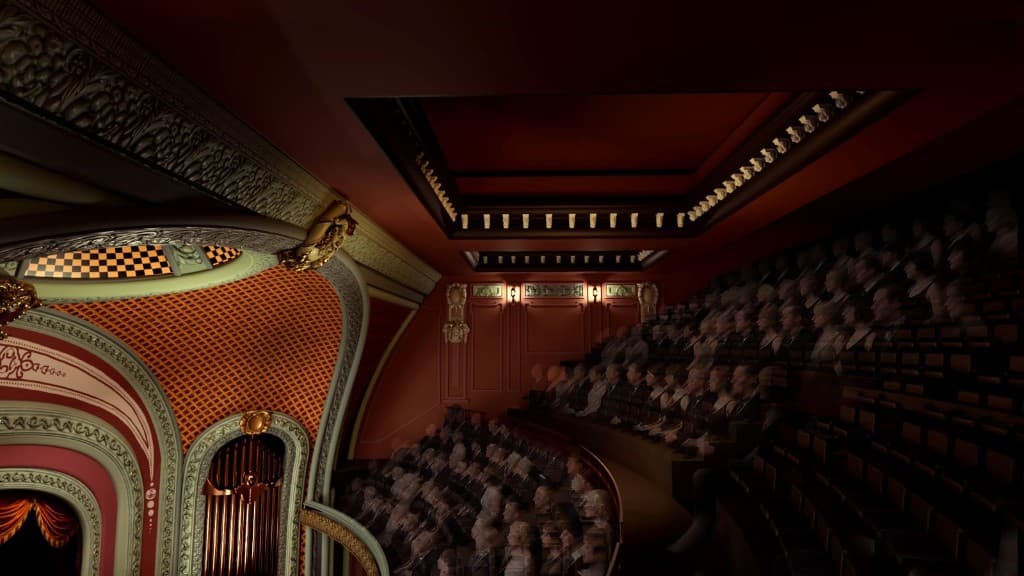
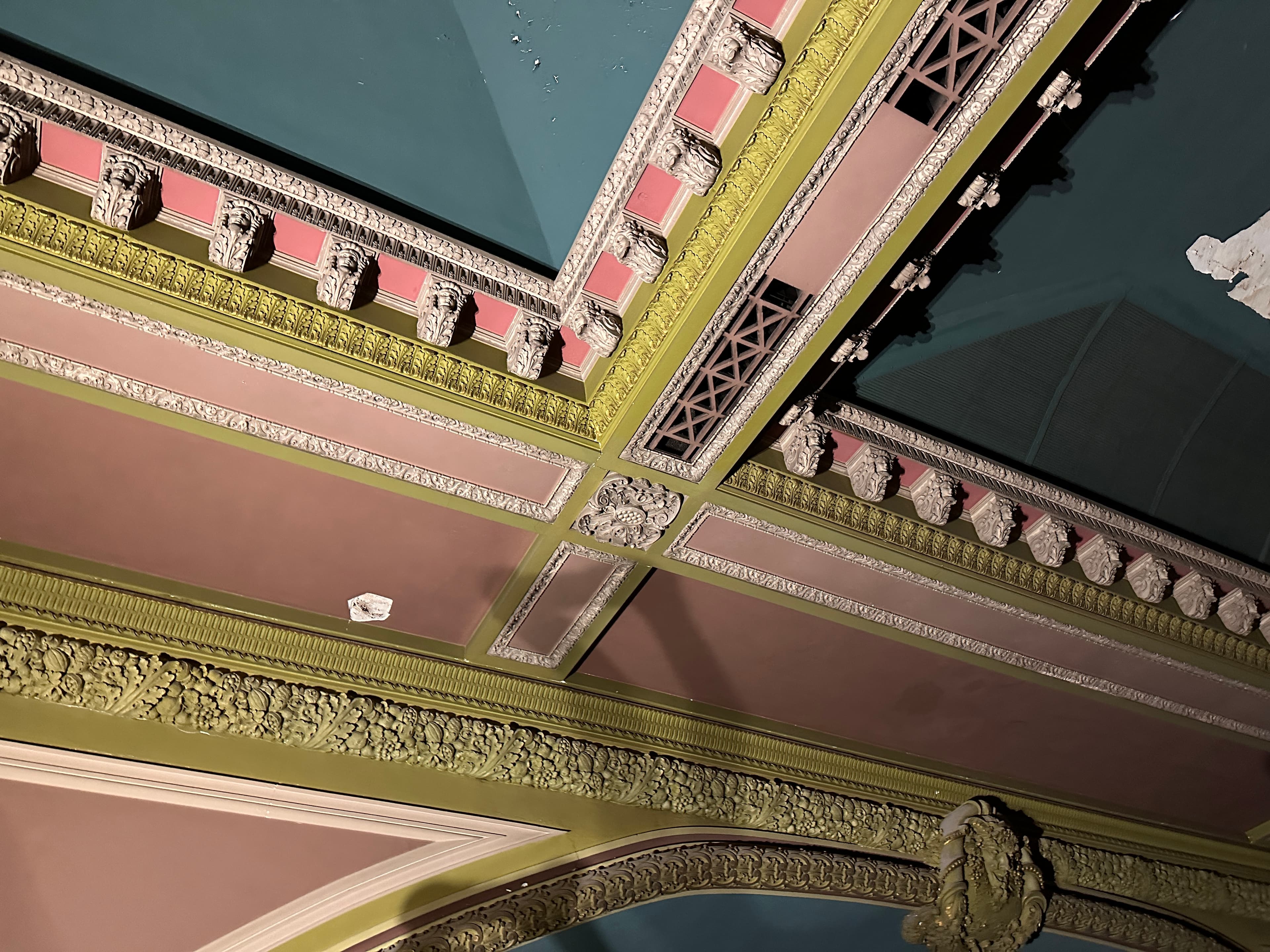
This is the 1916 Coliseum Theatre, designed by B. Marcus Priteca, the same architect behind the Pantages theatres across the West. It opened in 1916 and is widely called the first theatre in America purpose-built for motion pictures, not vaudeville. No stage house, no fly tower, just a vast room built around a screen. It sat roughly 2,000 people.
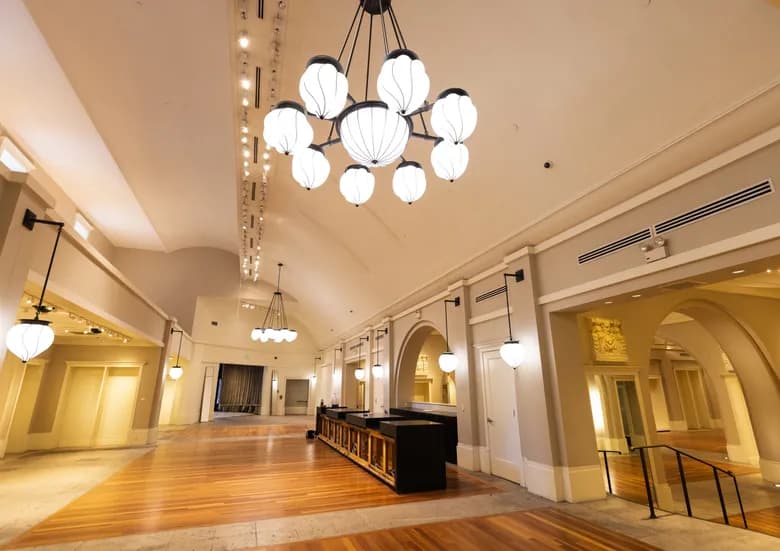
Point out the scale of the original room and the gilded plaster ornament that has survived in the dark. For about thirty years the space was sealed behind a retail-era drop ceiling while the ground floor served as a clothing store. Tell the group the ceiling they are standing under is false, and the real 1916 cathedral rises far above it.
What to point at: the cream and gold plaster crown molding, the proscenium curve where the screen once hung, and the warm coffered ceiling. Note the contrast between the two photos below, the rendered fly-through of how the room read when full, and the same space as it stands in 2025.
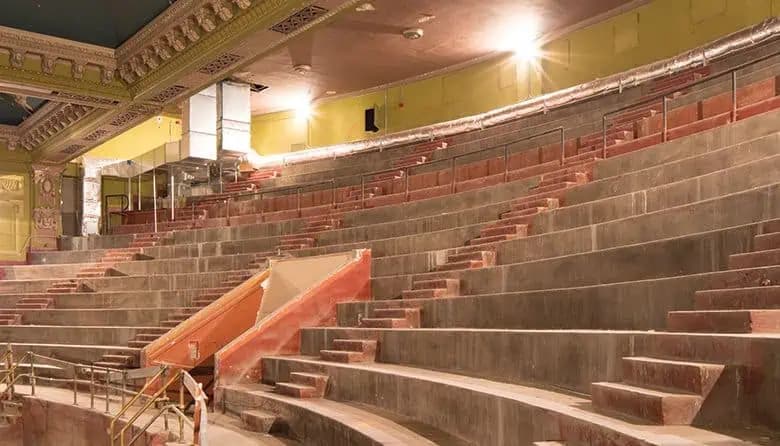
The Beat: This is where the hardhats and flashlights really come into play. Lead the group up the original spiral staircase to the upper balcony. This area was completely sealed off in the 1990s. Let them experience the dramatic view looking straight down onto the cathedral floor below, and draw their attention to the intricate ceiling details that are now right at hand height.
Sensory cues: the air is cooler and still up here, the carpet gives way to bare structure, and old retail-era HVAC equipment still sits among the original seats. Have people run a hand near the plaster (not on it) to feel how close the ornament is, then look down to register the drop. This is the single most surprising moment of the tour, so give it a beat of silence before you talk.
Location: Walking down Pike Street from 5th Ave toward 1st Ave and Pike Place.
The Beat: This is your connective walk, about five blocks downhill. Keep the group moving but use the buildings you pass as living time stamps. Almost everything along this stretch went up in the same decade as the Coliseum, during the boom that followed the Klondike Gold Rush and the regrading of Denny Hill. Point out three in particular as you go. They tell the story of how downtown grew north and west toward the water.
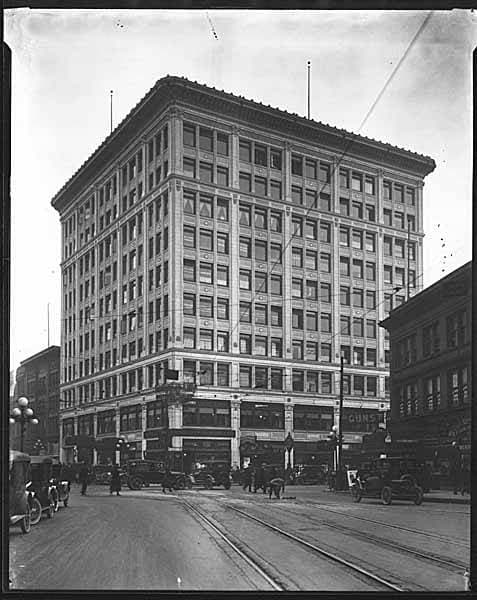
4th Ave & Pike (1425 4th Ave)
John Graham Sr., glazed terra cotta
First building you pass coming down from the Coliseum. Shipping magnate Joshua Green bought a row of derelict wooden buildings on this corner in 1905, tore them down, and put up this ten-story tower, one of Seattle's earliest steel-frame buildings. Point up at the cream-colored terra cotta skin, a fireproof cladding that was the height of fashion in the 1910s. Green lived to 105.
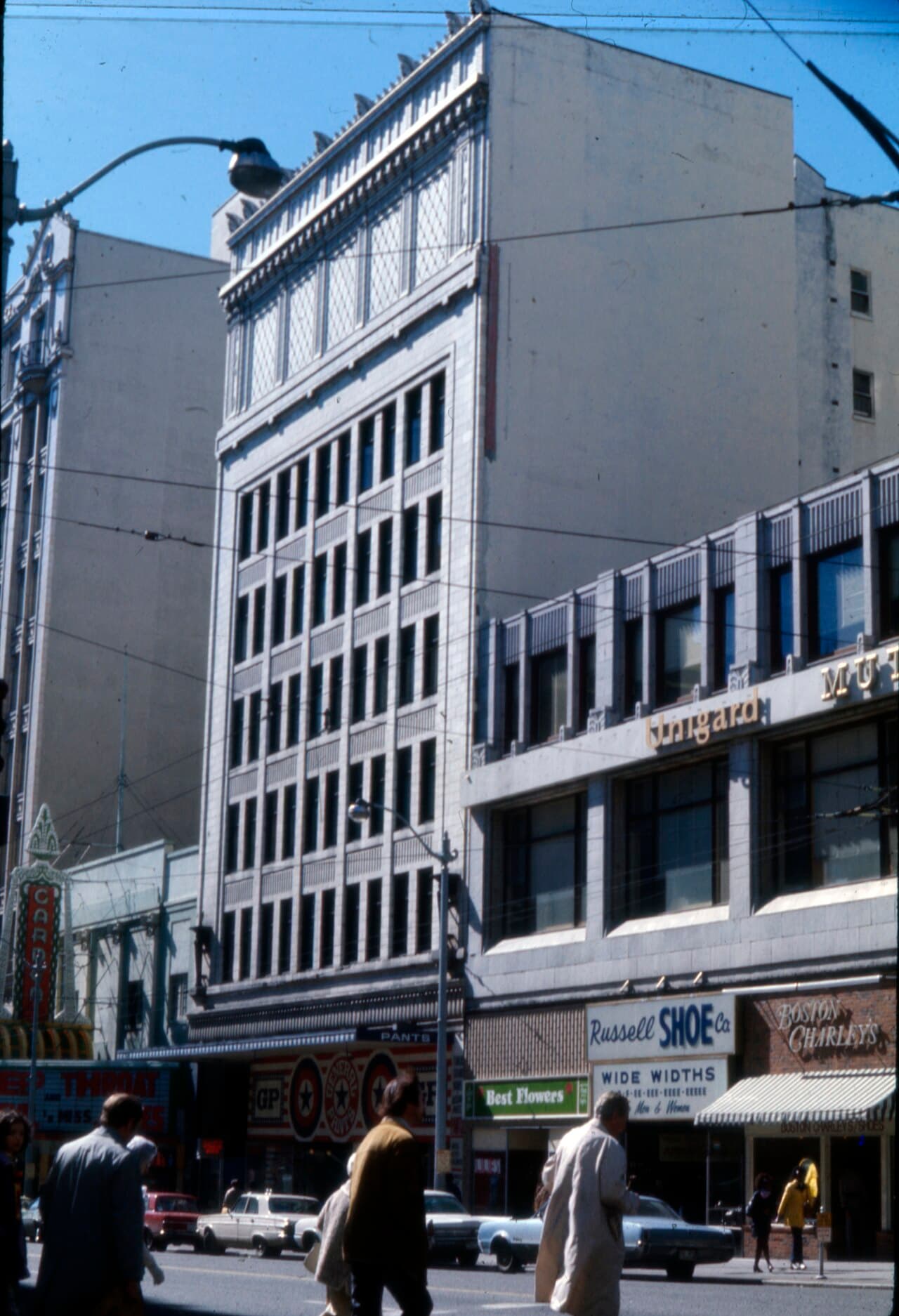
3rd Ave between Pike & Pine (1519 3rd Ave)
Bebb & Mendel, then Bebb & Gould
Built in two phases, the first three floors in 1912, then five more by 1915. It was designed for musicians, with live-in teaching studios and a concert hall and lounge on the top floors. A piano company anchored the ground floor. Tell the group that for decades you could hear scales and recitals drifting down to the sidewalk here.
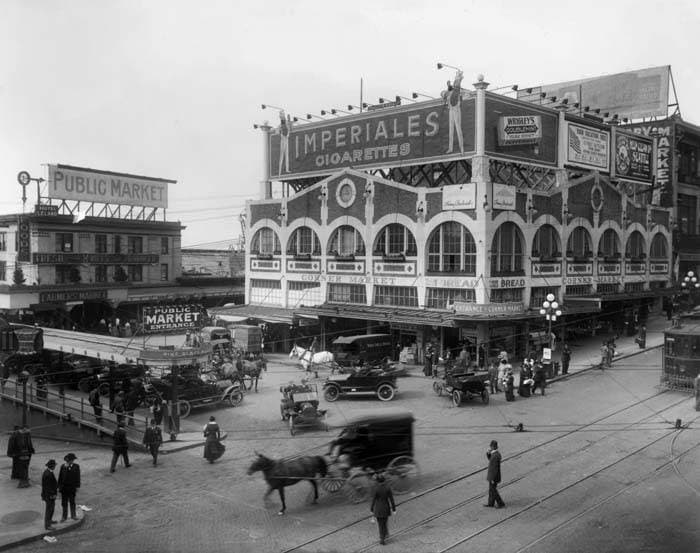
1st Ave & Pike (entrance to Pike Place Market)
Harlan Thomas with Clyde Grainger
Your last stop before the Lusty Lady, right at the mouth of Pike Place Market. It replaced the Hotel York, which sank and was torn down after the Great Northern Railway tunnel was dug sixty feet below. Three Girls Bakery opened here in 1912 and still operates nearby. In 1975 this was the first market building restored, the spark that saved the whole district.
Location: 1315 1st Ave, across from the Seattle Art Museum and the Hammering Man.
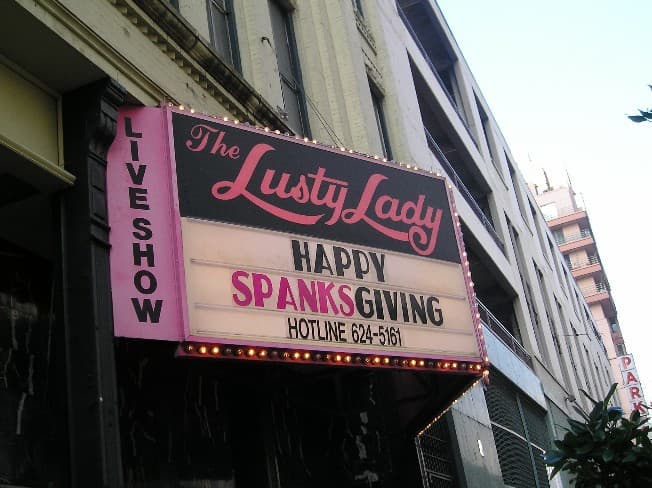
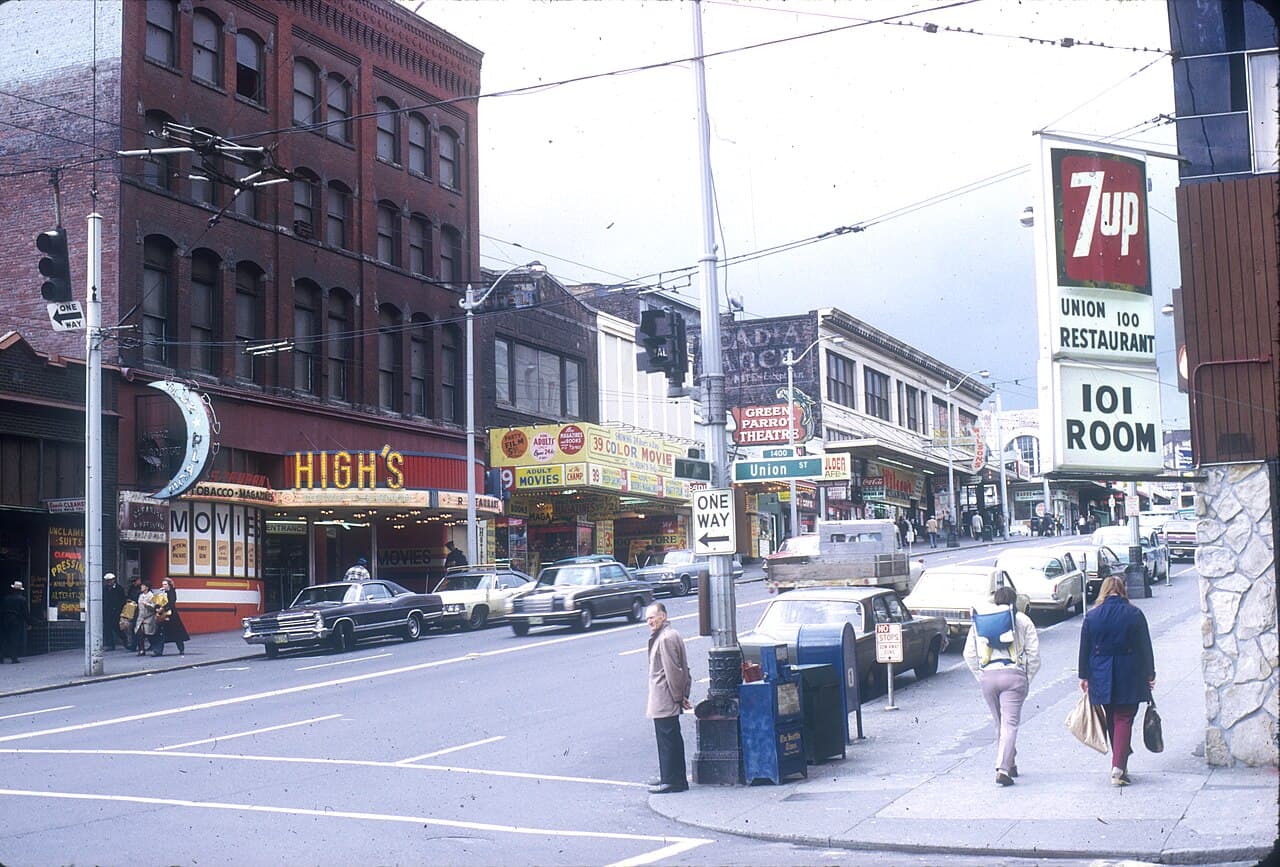
The Beat: This is the oldest building on the tour, a survivor from 1890, built the year after the Great Fire of 1889 as Seattle rebuilt in brick. It went up as a respectable commercial block. Walk the group through its lives, a 19th-century storefront and lodging block, the Seven Seas, and from 1985 to 2010 the famous Lusty Lady peep show with its punning marquee facing the art museum.
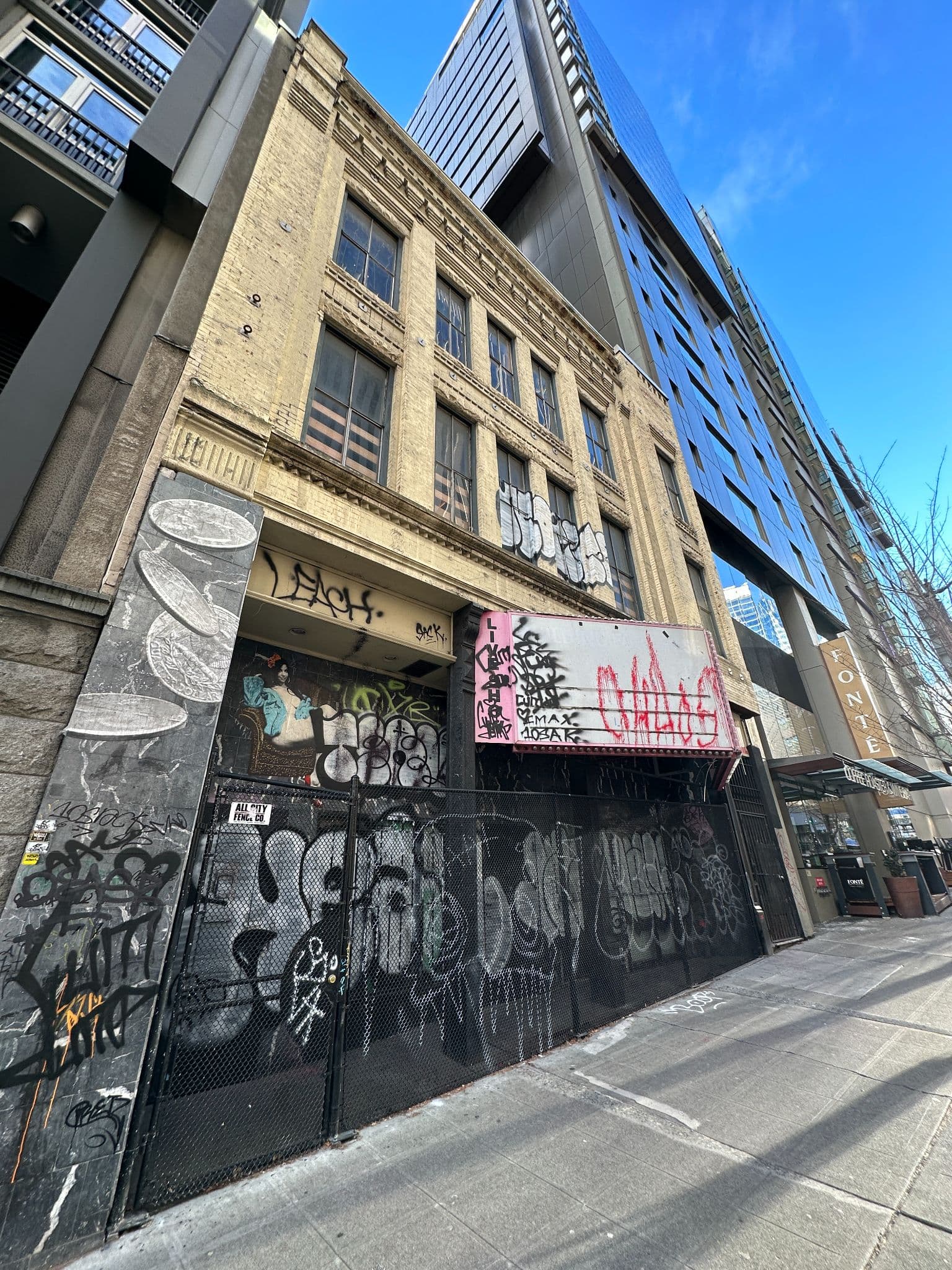
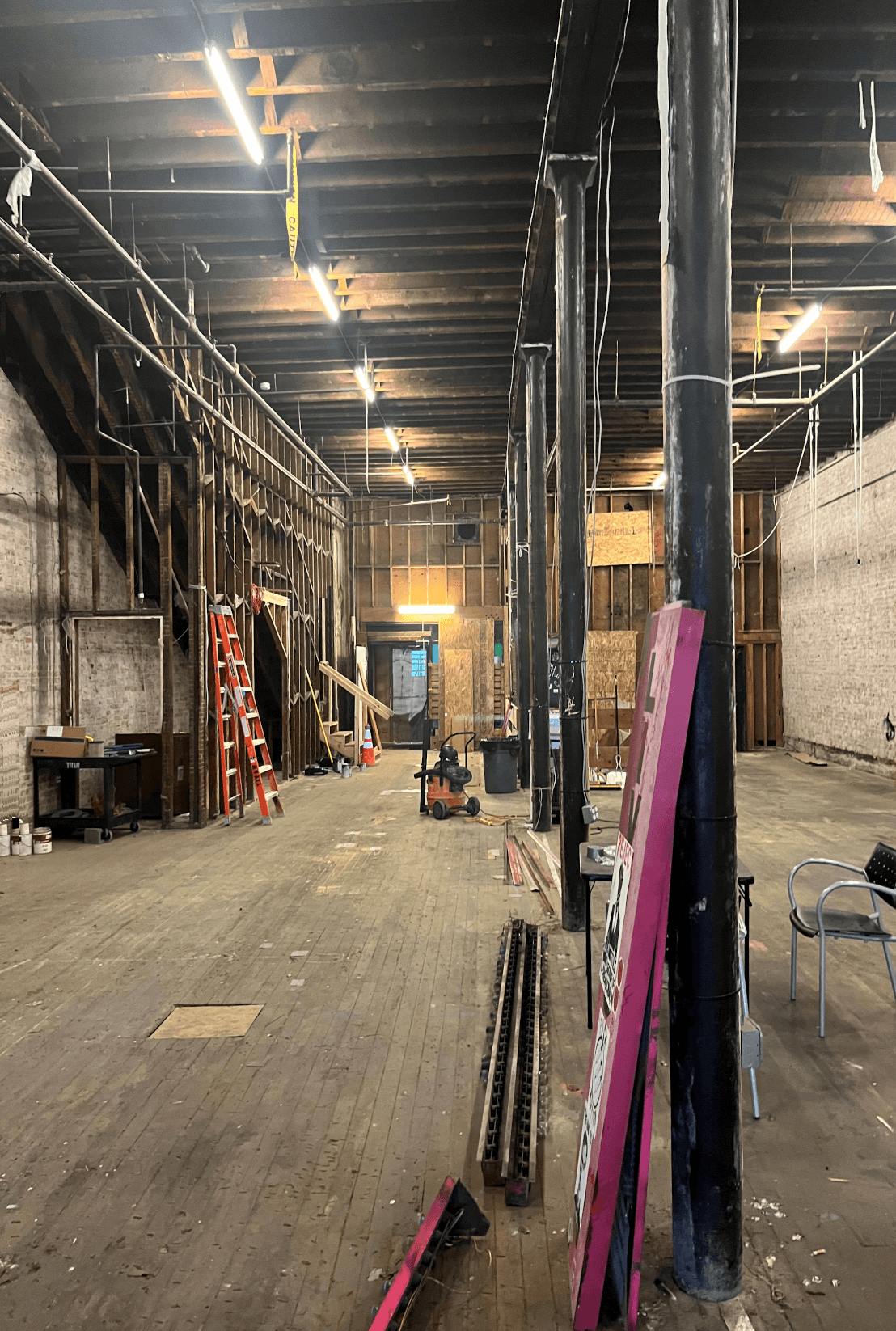
The door has been locked since 2010. Inside, CAF found the 1890 brick walls, exposed wood ceiling beams, and the original peep-show booths still in place. Tell the group almost no one outside the foundation has stood here since it closed.
What to point at: the layers of history reading top to bottom on the facade. The original yellow brick three-story block is intact above, the marquee has come down, and the lower storefront carries graffiti from its empty years. Look across 1st Avenue at Borofsky's Hammering Man for the contrast, polished museum culture on one side, a gritty survivor mid-pause on the other.
Sensory cues: dust, bare bulbs on construction cords, and the smell of an old sealed building. This is honest, unfinished space. Frame it as a building between chapters, not a ruin.
Location: 110 Union St, fourth-floor gallery.
The Beat: Bring the group to the final stop, a private fourth-floor gallery run by the Conru Art Foundation. After the dust and the sealed staircases, this is the warm landing of the tour. Walk them in, let them settle, and show them what is currently up on the walls. Drinks are usually open.
What to say: tie the morning together. They have just stood inside a 1916 movie cathedral and an 1890 survivor that the city forgot. The Salon is the living counterpart, a working space where the foundation shows contemporary art today. Debrief the time-travel experience, take questions, and thank them for joining the Conru Art Foundation's Summer of Awe.